Panel Discussion: Current Status, Barriers & Drivers of Smart Charging in Türkiye
The mobility sector accounts for a significant share of emissions and energy consumption. Germany and Türkiye are both advancing on the e-mobility transition within the framework of the Turkish-German Energy Partnership’s (TGEP) Working Group on Renewable Energy, Energy Infrastructure and Sector Coupling. Achieving this transition requires progress on several key fronts. Among these, developments in charging infrastructure, grid stability, price flexibility, and innovation in technology stand out. The transition is not limited to increasing number of electric vehicles; it also places issues such as distribution grid capacity, smart‑charging technologies, data integration, and dynamic pricing at the center of the agenda.
Following the publication of the TGEP’s policy paper titled “Drivers and Barriers: The Deployment of Charging Infrastructure for EVs in Türkiye”, experts from political institutions, regulatory authorities, research institutions, and industry from both countries convened at the panel discussion organised by the TGEP on 17.12.2025. Through the presentations and panel discussions, participants engaged in a productive exchange of views.
Opening remarks
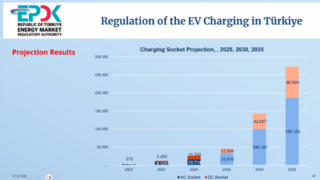
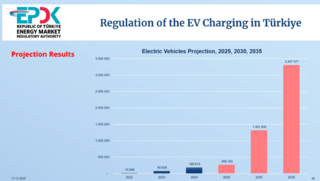
In his opening remarks, Mustafa Çalışkan, Head of Department, Renewable Energy & New Technologies, Republic of Türkiye Ministry of Energy and Natural Resources (MENR), highlighted Türkiye’s strong momentum in the electric vehicle sector, noting that the number of electric cars has reached 335,000 this year. He emphasised that this growth has also accelerated the expansion of charging infrastructure, with total capacity surpassing 2.7 GW. Mr Çalışkan added that mobility solutions will be further promoted as part of the 2024–2028 development plan.
Adrian Loets, Deputy Head of Division, Bilateral Energy and Climate Cooperation, Federal Ministry of Economic Affairs and Energy (BMWE), stressed the importance of standardisation, grid stability, battery technologies, and related measures to ensure a resilient energy system.
Insights from the presentations
In the launch event for the latest policy paper , experts from the TGEP emphasised that as Türkiye’s EV market grows rapidly, it is equally important for the charging network to advance at a similar pace. They pointed out several challenges while highlighting the need for expansion into rural areas, improved coordination between public institutions, clearer long-term regulations, promotion of private charging infrastructure and smart charging solutions, and targeted incentives to ensure a balanced and resilient national transition to electric mobility.
The Frauenhofer Institute gave a presentation, sharing that electric truck adoption is accelerating as batteries become cheaper and their ranges improve. Grid limits remain a challenge, but smart charging and shared infrastructure can lower costs. Incentives and rising diesel prices favour electrification, meaning early, well-planned investments in charging infrastructure are beneficial for long-term sustainability.
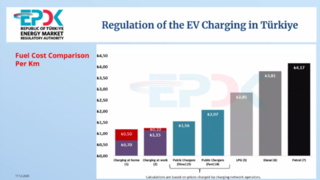
A presentation from Türkiye’s Energy Market Regulation Authority (EMRA) highlighted that Türkiye has regulated the charging market since 2022, with EMRA overseeing both charging stations and distribution companies. Türkiye now has DC stations in all 81 provinces, strong EV‑to‑charger ratios, and growing adoption of green charging. Upcoming regulatory updates aim to strengthen the network further, expand smart‑charging systems, and improve consumer experience.
Panel highlights
Following the presentations, stakeholders from the Energy Market Regulatory Authority of the Republic of Türkiye (EMRA), SHURA Energy Transition Centre, the German National Control Centre for Charging Infrastructure, Electrip Global, and VOLTLA engaged in a discussion on key topics.
Importance of distribution grids
As demand for electric vehicles continues to rise, charging infrastructure must expand at the same pace. Panelists underlined that in many regions, grid capacity is important in terms of setting up new charging stations. Industry representatives emphasised that grid management and capacity planning must now be treated as strategic priorities.
Smart charging: A new era of software and data
Panelists also pointed out that smart charging is not only about using the grid efficiently, its true potential emerges when it is integrated with software, data analytics, and user guidance. Analysing collected data, understanding user behavior, flexible distribution of the electricity currently being generated and sharing insights with charging operators all contribute to improving system-wide efficiency. This field is developing rapidly in Türkiye, and the sector is actively seeking ways to achieve maximum efficiency with minimal investment.
Dynamic pricing and new rules for smart charging systems
Hourly and location-based dynamic pricing is increasingly viewed as one of the most effective tools for ensuring the sustainable growth of the EV ecosystem. Through this model:
- Grid congestion can be reduced
- Users can charge at lower costs
- Charging stations can operate more efficiently
Regulatory authorities are preparing to introduce new measures in the coming year to support dynamic pricing. The goal is to ease pressure on the grid while accelerating companies’ transition to this model. In the new regulatory period, the conditions for using smart charging systems will be more clearly defined. Regulations will address simultaneous usage, low-demand periods, and grid management. This will make both user behavior and the operation of charging infrastructure more predictable.
B2G (battery-to-grid) innovation
Bidirectional charging and B2G technologies are expected to play a significant role in the future energy system. Regulators aim to create space for innovations in this area. As vehicles with larger batteries become more common, their storage capacity will become a valuable asset for the grid. R&D activities in this field are being closely monitored, and authorities indicate that regulations will be introduced if necessary.
Future Directions
Participants from Türkiye and Germany will continue contributing to exchange and collaboration on the topic through the Turkish-German Energy Partnership’s Working Group on Renewable Energy, Energy Infrastructure and Sector Coupling
You can read the policy paper here.